

Go to New Games


World Soccer Physics

World Soccer Physics

Basketball Hit

Pet Runner

Tomb Runner

Basket Sports Stars

Extreme Raptor Racing

Dino T Rex 3D Run

Home Run Infinity

Dino Game For 2-3 Players

TapKO

Football: Robots vs Zombies, World Cup!

Rocketcar Cup

PunchBox 3D
Golf Mini

Free Kick Challenge 2026

Hoop Land
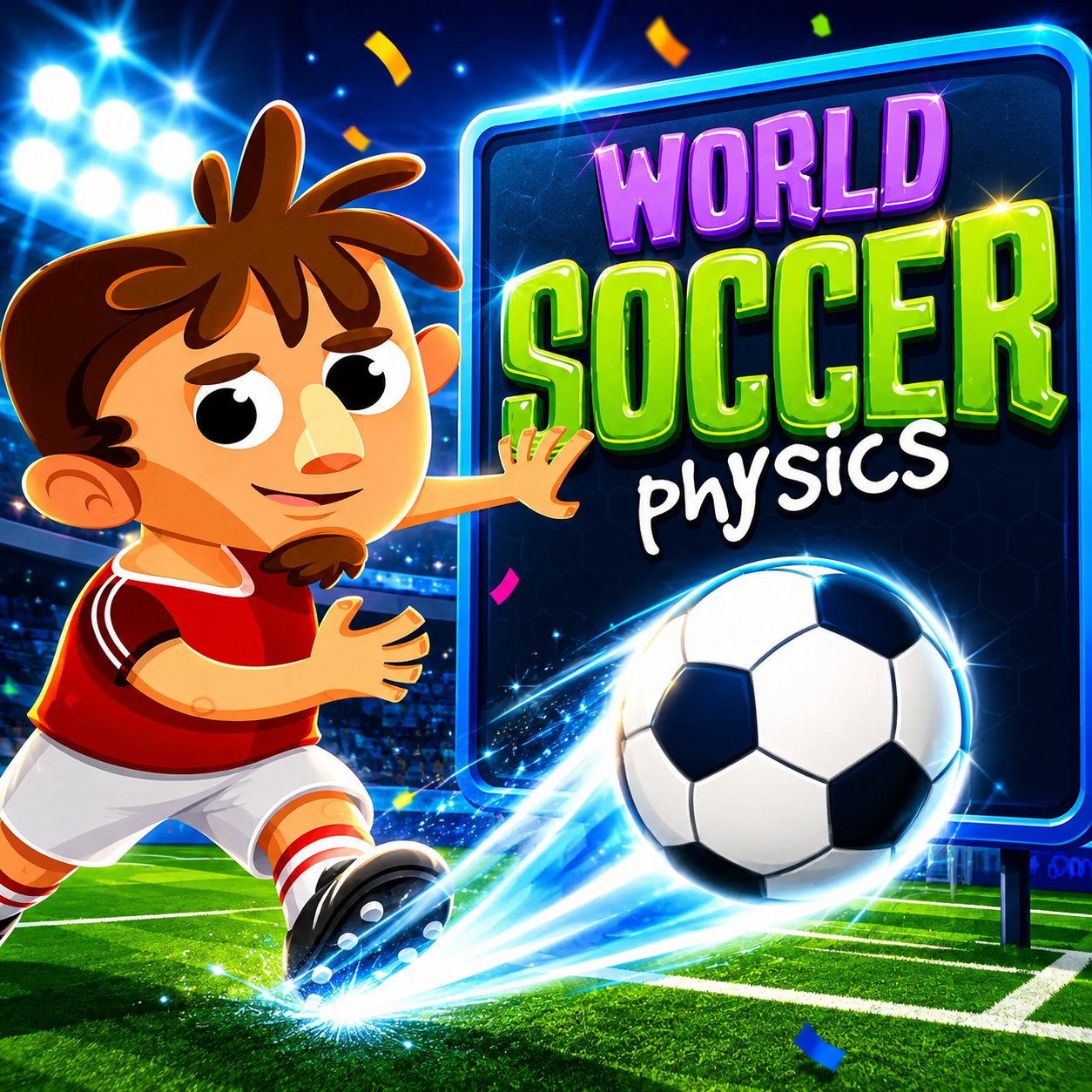
Newton's principles rule World Soccer Physics, a fascinating experiment. All the way down to the goalkeeper's sprawling position on the line despite no shots being made.
The Opening Whistle
You choose a national team, step onto the field with two physics-controlled puppets, and the battle officially begins. The pitch requires chaos resistance and a heart that laughs at tragedy, not tactical maneuvering. Each match is a short story, where players somersault like they're doing gymnastics instead of fighting for a ball. Two players wobble instead of sprinting, crash instead of shooting, and never remain still for more than five seconds. The ball on the field doesn't follow any graceful trajectory—it bounces wildly, rolling questionably. Early challenges become amateurish puppet shows, with players' bodies flung about, limbs extended in every direction uncontrollably. That's where randomness takes center stage, turning each goal into an unbelievable story. In chaos, a new talent emerges: the capacity to take risks, forecast the bounce, and make impossible circumstances conceivable. World Soccer Physics teaches you that sometimes, recklessly charging at the ball is the most logical strategy.
One-On-One Combat
If playing alone against AI is a bizarre adventure, the two-player mode transforms the experience into a chaotic, laughter-filled party. The game strips away all technical barriers, allowing two people sitting side-by-side—at the same keyboard—to face off directly. A computer, two sets of arrow keys, WASD, and space to avoid the loser hitting the winner are all you need. The pressure in the first few matches makes people forget their rationality.
Beneath the humorous and carefree exterior, the game actually contains a sophisticated skill system that only patient players will discover. Initially, every play seems like a traffic accident, but gradually, you begin to notice the patterns. Ball bounce angle at the post, player inertia while leaping in the wind, and optimum timing to make a directed header. A good player isn't the one who jumps the most, but the one who jumps at the right time. They drop back to create space, draw opponents into a fight, then employ ragdoll momentum to counterattack. They turn the goalpost from an enemy into a friend, using it to pass the ball behind the opponent's back. The longer you play, the more you realize that control isn't absolute but relative. The game has a high repeat rate since every time you play, you may improve your swordsmanship.